
Nikon F4 Manual: A Comprehensive Guide (Updated 12/16/2025)
Unlock the full potential of your Nikon F4! This comprehensive user manual details installation‚ operation‚ and maintenance – keep this guide handy for years to come.
Updated: 12/16/2025 07:42:27
Welcome to the world of professional photography with the Nikon F4! Released in 1988‚ the F4 represents a pinnacle of Nikon’s 35mm SLR design‚ offering a robust build and advanced features for serious photographers.
This manual serves as your complete guide to mastering this iconic camera. Whether you’re a seasoned professional or a passionate enthusiast‚ understanding the F4’s capabilities will unlock a new level of creative control. We’ll cover everything from basic operation and film loading to advanced autofocus settings and custom functions.
The Nikon F4 isn’t just a camera; it’s a tool built to withstand the rigors of professional use‚ delivering exceptional image quality and reliability. This guide‚ updated as of December 16‚ 2025‚ ensures you have the latest information to fully utilize its potential. Prepare to embark on a journey of photographic excellence!
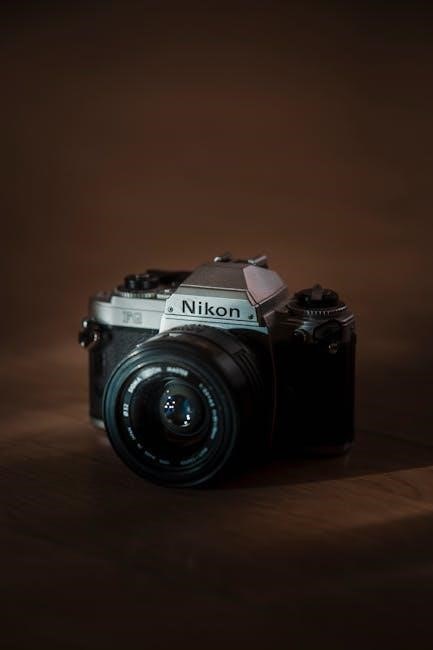
Historical Context & Significance
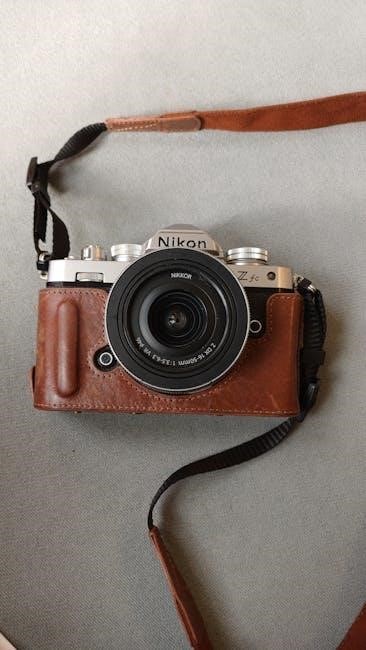
The Nikon F4 arrived in 1988‚ marking a significant leap forward in Nikon’s professional-grade SLR lineup. It followed the highly successful F3‚ building upon its strengths while introducing groundbreaking advancements in autofocus technology and overall functionality.
At the time of its release‚ the F4 was a flagship camera‚ designed to compete with Canon’s professional offerings. Its sophisticated matrix metering system‚ advanced autofocus capabilities‚ and durable construction quickly established it as a favorite among photojournalists and professional photographers.
The F4’s impact extends beyond its technical specifications; it represents a pivotal moment in the transition from fully mechanical cameras to electronically assisted systems. It remains a highly sought-after camera by collectors and photographers alike‚ celebrated for its build quality and enduring legacy. Updated 12/16/2025.
Key Features and Specifications
The Nikon F4 boasts a robust feature set designed for professional use. It features a 35mm film format‚ a high-precision autofocus system with five focus points‚ and advanced matrix metering for accurate exposures. Shutter speeds range from 1/8000 to 1 second‚ plus bulb mode.
Key specifications include compatibility with Nikon F-mount lenses‚ a built-in motor drive supporting up to 3.7 frames per second‚ and multiple exposure capabilities. The camera accepts AA batteries‚ offering substantial power for extended shooting sessions.
Its durable body construction ensures reliability in demanding conditions. Updated 12/16/2025‚ the F4 also offers customizable functions and a comprehensive information display within the viewfinder‚ enhancing user control and convenience.

Understanding the Nikon F4 Body
Explore the Nikon F4’s build! This section details its construction‚ ergonomic design‚ and how the body’s features contribute to a comfortable shooting experience.
Body Construction and Ergonomics
The Nikon F4 boasts a robust‚ professional-grade body constructed primarily of metal alloys‚ ensuring durability and a substantial feel in the hand. Its weather sealing provides protection against dust and moisture‚ vital for demanding shooting conditions.
Ergonomically‚ the F4 is designed for comfortable‚ extended use. The grip is deeply contoured‚ accommodating various hand sizes‚ and the control layout is logically arranged for intuitive operation. Buttons and dials are well-spaced‚ minimizing accidental adjustments.
The camera’s weight (approximately 880g without batteries or film) contributes to its stability‚ particularly when using longer lenses. The rear panel features a clear‚ informative LCD screen‚ and the overall design prioritizes a secure and balanced handling experience for photographers.
Viewfinder System & Information Display
The Nikon F4’s viewfinder is a key strength‚ offering a large‚ bright‚ and clear view of the scene. It provides approximately 100% coverage‚ ensuring accurate framing. Diopter adjustment accommodates varying eyesight‚ eliminating the need for glasses during shooting.
The information displayed within the viewfinder is comprehensive‚ including focus points‚ exposure settings (shutter speed‚ aperture)‚ metering mode‚ and film advance information. This allows photographers to monitor crucial settings without taking their eye from the subject.
Additionally‚ the top-panel LCD screen mirrors much of this information‚ offering a quick reference for settings. Both displays utilize a clear‚ easy-to-read font‚ even in low-light conditions‚ enhancing the overall shooting experience.
Controls and Dials: A Detailed Overview
The Nikon F4 features a logically arranged control layout‚ prioritizing accessibility and efficient operation. Prominent dials govern shutter speed and exposure compensation‚ offering tactile feedback for precise adjustments. A mode dial selects shooting modes – Program‚ Aperture Priority‚ Shutter Priority‚ and Manual.
Dedicated buttons provide direct access to autofocus settings‚ metering modes‚ and drive modes. The rewind and advance levers are robust and reliable‚ ensuring smooth film transport. A custom function button allows personalization of camera behavior.
The F4’s ergonomics are thoughtfully designed‚ placing frequently used controls within easy reach. This intuitive layout minimizes the need to navigate complex menus‚ enabling photographers to focus on composition and capturing the moment.

Exposure Control & Metering
Master light with the F4’s versatile system! Explore spot‚ center-weighted‚ and matrix metering for accurate exposures in diverse shooting scenarios‚ ensuring optimal results.
Metering Modes: Spot‚ Center-Weighted‚ and Matrix
The Nikon F4 offers three distinct metering modes‚ each suited for different photographic situations. Spot metering precisely measures light from a very small area of the frame – approximately 2.25° – ideal for challenging lighting or subjects against bright backgrounds.
Center-weighted metering prioritizes the center of the frame‚ gradually decreasing sensitivity towards the edges. This mode is excellent for general photography where the main subject is centrally located.
Finally‚ Matrix metering (also known as evaluative metering) analyzes the entire frame‚ dividing it into segments and calculating an average exposure. This is the most versatile mode‚ performing well in a wide range of conditions‚ and is particularly useful for dynamic scenes. Understanding these modes allows photographers to achieve consistently accurate exposures and creative control over their images;
Exposure Compensation & Lock
The Nikon F4 provides crucial tools for refining exposure: Exposure Compensation and Exposure Lock. Compensation allows you to intentionally over or underexpose the image‚ adjusting the meter’s reading in +/- EV steps. This is vital when shooting subjects that are significantly brighter or darker than average‚ like snow or a dark suit.
Exposure Lock (AE Lock) enables you to fix the exposure reading on a specific part of the scene‚ even as you recompose the shot. Press and hold the AE-L/AF-ON button to lock the exposure‚ then recompose and shoot. This is incredibly useful for backlit subjects or scenes with high contrast. Mastering these features ensures accurate and creative control over your final images.
Shutter Priority Mode
In Shutter Priority Mode (designated ‘S’ on the mode dial)‚ you‚ the photographer‚ dictate the shutter speed‚ while the Nikon F4 automatically selects the appropriate aperture for correct exposure. This mode is ideal for controlling motion – freezing action with fast shutter speeds or blurring movement with slower ones.
The camera’s metering system analyzes the scene and adjusts the aperture to achieve a balanced exposure based on your chosen shutter speed. Remember to monitor the aperture value displayed in the viewfinder to ensure sufficient depth of field for your subject. This mode offers creative freedom‚ allowing you to prioritize motion control over aperture settings.
Aperture Priority Mode
Aperture Priority Mode‚ indicated by ‘A’ on the mode dial‚ empowers you to control the depth of field by selecting the desired aperture (f-stop). The Nikon F4 then automatically determines the appropriate shutter speed for correct exposure. This mode excels when controlling which elements of the scene are in focus.
A wider aperture (smaller f-number like f/2.8) creates a shallow depth of field‚ ideal for isolating subjects with blurred backgrounds. Conversely‚ a narrower aperture (larger f-number like f/16) yields greater depth of field‚ keeping more of the scene sharp. Always observe the shutter speed displayed in the viewfinder to avoid motion blur.
Program Mode & Flexible Program
Program Mode (P) on the Nikon F4 offers a balanced approach‚ automatically selecting both aperture and shutter speed for optimal exposure. It’s a great starting point for various shooting scenarios‚ providing convenience without sacrificing control. However‚ the F4’s Flexible Program elevates this mode.
Flexible Program allows you to shift the program exposure – adjusting both aperture and shutter speed simultaneously – while maintaining correct exposure. Rotating the main command dial shifts the program‚ offering creative control over depth of field and motion blur. This is indicated by ‘P*’ in the viewfinder. It’s a powerful tool for fine-tuning images without fully switching to Aperture or Shutter Priority.
Manual Mode: Full Control
Manual (M) mode on the Nikon F4 grants photographers complete authority over both aperture and shutter speed. This mode is essential for situations where automatic exposure systems struggle‚ like challenging lighting or when a specific creative effect is desired. The F4’s robust metering system remains active in Manual mode‚ providing a clear exposure reading in the viewfinder as a guide.
To operate in Manual mode‚ set both the aperture and shutter speed dials independently. Carefully monitor the exposure indicator to achieve the desired brightness. Experienced photographers often utilize Manual mode for consistent results and artistic expression‚ bypassing the camera’s automated decisions for ultimate control over the final image.

Autofocus System
The Nikon F4’s autofocus system offers Single‚ Continuous‚ and Dynamic modes for precise focusing. Master focus area selection and AF-S/AF-C tracking for sharp images!
Autofocus Modes: Single‚ Continuous‚ and Dynamic
The Nikon F4 provides three distinct autofocus modes‚ each tailored for specific shooting scenarios. Single (S) mode is ideal for stationary subjects‚ locking focus once achieved – perfect for portraits or landscapes. Continuous (C) mode excels with moving subjects‚ constantly adjusting focus to maintain sharpness as they move‚ crucial for sports or wildlife.
Dynamic autofocus represents a sophisticated approach. It allows you to initially select a focus point‚ but the camera will intelligently track the subject even if it moves outside that initial point‚ utilizing surrounding sensors. This mode is exceptionally useful for unpredictable movement. Understanding these modes and selecting the appropriate one is key to consistently capturing sharp‚ well-focused images with your Nikon F4. Experiment with each to discover their strengths!
Focus Area Selection
The Nikon F4 offers versatile focus area selection‚ empowering you to precisely control where the camera prioritizes focus. You can choose from five focus areas‚ strategically positioned across the viewfinder. This allows for pinpoint accuracy when focusing on specific elements within your composition.
Manual selection is achieved via dedicated buttons on the camera body‚ enabling quick adjustments even during dynamic shooting situations. Consider your subject and composition when choosing a focus area. For portraits‚ a central area is often best‚ while landscapes might benefit from off-center placement. Mastering focus area selection is crucial for achieving consistently sharp results and directing the viewer’s attention exactly where you intend.
AF-S and AF-C Tracking
The Nikon F4’s autofocus system features two primary tracking modes: AF-S (Single) and AF-C (Continuous). AF-S is ideal for stationary subjects‚ locking focus once achieved. Press the shutter button halfway to focus‚ and the focus remains fixed even if the subject moves.
AF-C‚ conversely‚ is designed for moving subjects. The camera continuously adjusts focus as the subject’s distance changes‚ ensuring sharpness throughout a sequence. Selecting the appropriate mode depends entirely on your subject’s movement. Experiment with both to understand their strengths. Proper use of AF-S and AF-C dramatically increases your success rate when photographing dynamic scenes‚ delivering consistently sharp images.
Film Handling & Management
Master film loading‚ rewinding‚ and advance with the Nikon F4. Learn about DX code reading and precise film speed settings for optimal results.
Film Loading and Rewinding
Loading film into the Nikon F4 is a straightforward process‚ but requires attention to detail. First‚ open the back of the camera using the film rewind knob. Insert the film canister into the left-side chamber and ensure it clicks into place.
Next‚ thread the film leader across the film guides and into the take-up spool on the right side. Advance the film using the rewind knob until the perforations engage with the sprockets. Close the camera back securely.
Rewinding the film is equally simple. Press the film rewind release button on the bottom of the camera. Turn the rewind knob in the direction of the arrow until you feel the film fully disengage. Open the camera back and carefully remove the film canister. Proper loading and rewinding ensure your film is safely stored and ready for development.
Film Advance Options
The Nikon F4 offers several film advance options to suit different shooting styles. The standard method utilizes the manual winding lever‚ providing tactile feedback and precise control over frame advancement. Each stroke of the lever advances the film one frame‚ allowing for deliberate composition and timing.
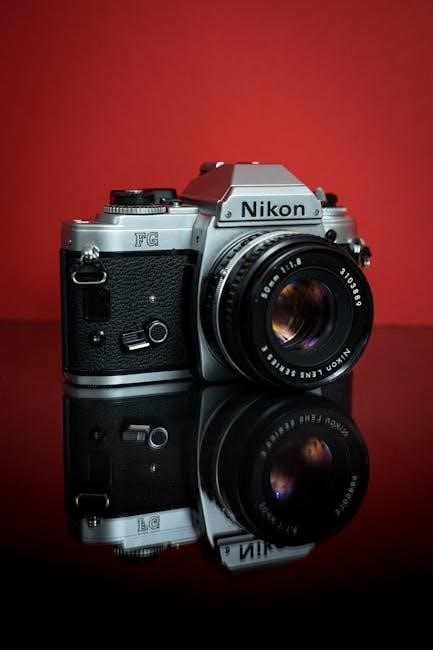
Alternatively‚ the F4 is compatible with the optional Motor Drive MN-2‚ enabling continuous high-speed film advance. This is ideal for action photography or capturing fleeting moments. The motor drive significantly speeds up the shooting process‚ allowing you to react quickly to dynamic scenes.
Choosing the right film advance method depends on your photographic needs. Manual advance offers greater control‚ while the motor drive prioritizes speed and efficiency.
DX Code Reading & Film Speed Setting
The Nikon F4 automatically reads the DX code on most 35mm film canisters‚ simplifying film speed setting. This code communicates the film’s ISO sensitivity to the camera‚ ensuring accurate exposure. When a DX-coded film is loaded‚ the F4 displays the detected ISO value in the viewfinder.
However‚ for films without a DX code‚ or if you wish to override the automatic setting‚ the F4 allows manual film speed input. Use the corresponding buttons and dials to select the desired ISO value. Accurate film speed setting is crucial for proper exposure‚ so double-check your selection.
The camera remembers the last manually set film speed‚ even after being turned off‚ offering convenience for frequently used film types.
Advanced Features & Customization
Tailor the Nikon F4 to your shooting style! Explore custom functions‚ multiple exposure capabilities‚ and depth of field preview for enhanced creative control.
Custom Functions: Personalizing the F4
The Nikon F4’s custom functions offer a remarkable degree of personalization‚ allowing photographers to adapt the camera to their individual preferences and shooting styles. These functions‚ accessible through the camera’s menu system‚ control a wide range of camera behaviors.
You can customize settings like autofocus behavior‚ metering options‚ viewfinder display‚ and even the operation of buttons and dials. For example‚ you might assign a frequently used function to a custom button for quicker access in the field.
Experimenting with these settings is key to maximizing the F4’s potential. Carefully review each custom function in the manual to understand its impact on camera operation. Remember to document your changes‚ so you can easily revert to default settings if needed. Mastering custom functions unlocks a truly tailored shooting experience.
Multiple Exposure Mode
The Nikon F4’s Multiple Exposure mode allows you to creatively combine two or more images into a single frame‚ opening up a world of artistic possibilities. Accessed through the camera’s menu‚ this feature lets you layer exposures for surreal or dreamlike effects.
You can choose to combine a specified number of exposures‚ or continuously add to the frame until manually stopped. The F4 offers options for averaging the exposures or simply adding them together. Careful consideration of exposure values is crucial to avoid over or underexposure in the final image.
Experiment with different subjects and settings to discover unique and compelling results. Multiple exposure is ideal for creating ghosting effects‚ blending textures‚ or building up complex compositions. Remember to reset the counter after each sequence!
Depth of Field Preview
The Nikon F4’s Depth of Field Preview function is an invaluable tool for visually assessing the extent of focus before capturing the image. Located near the lens mount‚ activating this lever stops down the lens to the selected aperture.
This allows you to directly observe the area that will be in sharp focus‚ ensuring critical elements are rendered with desired clarity. It’s particularly useful when working with shallow depths of field or landscapes where precise focus is paramount.
However‚ be aware that engaging the preview darkens the viewfinder image‚ making composition slightly more challenging. Release the lever before shooting to return to the brightest viewfinder view and activate the shutter.

Maintenance & Troubleshooting
Ensure your Nikon F4’s longevity with proper care! This section covers cleaning‚ storage‚ common issues‚ solutions‚ and vital battery information for optimal performance.
Cleaning and Storage
Maintaining your Nikon F4’s pristine condition requires regular cleaning and careful storage. Gently remove dust from the body with a soft‚ dry cloth. Avoid using harsh chemicals or solvents‚ as these can damage the finish.
For the viewfinder‚ use a blower brush to dislodge any particles. The lens surfaces should be cleaned with dedicated lens cleaning tissue and fluid.
Proper storage is crucial. When not in use‚ store the F4 in a cool‚ dry place‚ away from direct sunlight and extreme temperatures. Consider using a camera bag or case to protect it from dust and impacts. Remove the batteries during prolonged storage to prevent corrosion. Regularly check the battery compartment for any signs of leakage.
A well-maintained F4 will provide years of reliable service.
Common Issues and Solutions
Encountering problems with your Nikon F4? Here are some common issues and their solutions. If the camera fails to power on‚ first check the batteries and ensure they are correctly installed. A malfunctioning film advance might indicate a problem with the motor drive – try resetting the camera.
Metering inaccuracies can often be resolved by cleaning the meter window. If autofocus isn’t functioning‚ verify the lens is properly attached and the AF mode is correctly selected.
Error messages displayed on the LCD should be referenced in the camera’s full manual for specific troubleshooting steps. If issues persist‚ professional servicing is recommended. Avoid attempting complex repairs yourself.
Battery Information & Replacement
The Nikon F4 utilizes CR123A lithium batteries for power. Typically‚ two batteries are required for operation‚ though usage patterns significantly impact battery life. Expect approximately 20 rolls of 36-exposure film per set of batteries under normal conditions.
To replace the batteries‚ locate the battery compartment on the camera’s bottom. Ensure the camera is switched off before opening. Observe the correct polarity when inserting new batteries. Always replace both batteries simultaneously to prevent inconsistencies.
Low battery warnings appear in the viewfinder. It’s advisable to carry spare batteries‚ especially during extended shooting sessions. Dispose of used batteries responsibly‚ following local regulations.