Sheet Cake Cutting Guide: A Comprehensive Approach
Navigating sheet cake cutting can be surprisingly complex! This guide offers detailed techniques, from basic slicing to advanced methods, ensuring beautiful and consistent portions for any occasion.
We’ll explore tools, frosting preservation, and even specialized techniques like the Tubingen and muffin methods for larger cakes, guaranteeing a polished presentation.
Understanding Sheet Cakes & Cutting Challenges
Sheet cakes, prized for their simplicity and affordability, present unique cutting challenges compared to layered or round cakes. Their large surface area and often delicate frosting make achieving clean, uniform slices difficult. Unlike the structured support of layers, sheet cakes can easily crumble during slicing, leading to messy portions and damaged presentation.
The very nature of a sheet cake – a single, expansive layer – means that even slight inconsistencies in pressure or knife angle can result in uneven pieces. Frosting integrity is also a major concern; a dull knife or improper technique can drag and smear the frosting, ruining the cake’s aesthetic appeal. Furthermore, determining appropriate serving sizes across a large surface requires careful planning and accurate marking.
Successfully navigating these challenges requires understanding the cake’s structure, utilizing the right tools, and mastering specific cutting techniques. This guide will address these issues, providing solutions for both novice bakers and experienced decorators.
Essential Tools for Sheet Cake Cutting
Achieving clean sheet cake cuts relies heavily on having the right tools at your disposal. A cutting board provides a stable and hygienic surface, protecting your countertops. However, a cake turntable is arguably the most valuable asset, allowing for precise rotation and consistent slice angles – crucial for uniform portions.
The most important tool is a serrated knife, often likened to a bread knife. Its saw-like edge gently cuts through the cake and frosting without compressing or tearing. A long blade is preferable for spanning the width of a sheet cake in a single stroke. Beyond these essentials, consider a ruler or measuring tape for accurate marking of cutting lines, and a warm water basin for heating the knife.
Optional, but helpful, tools include offset spatulas for smoothing frosting after cutting and a bench scraper for cleaning up crumbs. Investing in quality tools will significantly improve your cake-cutting experience and the final presentation.
Preparing the Sheet Cake for Cutting
Before you even think about slicing, proper preparation is key to a successful sheet cake cutting experience. Ensure the cake is thoroughly chilled; a firm, cold cake holds its shape better and produces cleaner cuts. A well-executed crumb coat and smooth frosting are also vital – they provide a stable surface and minimize crumbling during slicing.
If the frosting is exceptionally soft, a brief return to the refrigerator can help firm it up. Inspect the cake for any air bubbles or imperfections that might affect the cut. Gently smooth any uneven areas with an offset spatula. Consider lightly dusting the cutting surface with powdered sugar to prevent sticking, though this isn’t always necessary.
Finally, take a moment to visualize your cuts and plan your approach; A little preparation goes a long way in achieving professional-looking slices and a beautiful presentation.
Step 1: Initial Assessment & Planning
Begin by carefully assessing the sheet cake’s dimensions and overall structure. Determine the desired serving size – are you aiming for 8, 10, or a larger number of portions? This initial step dictates your cutting strategy. Visualize how you’ll divide the cake to achieve even slices, considering the cake’s length and width.
If the cake has decorations, factor those into your plan. Avoid cutting directly through intricate designs if possible. Identify the center point of the cake; this serves as a crucial reference for symmetrical cuts. Consider whether trimming the edges is necessary for a cleaner presentation, though this is optional.
Mentally map out your cutting lines before making the first incision. A well-thought-out plan minimizes errors and ensures a professional result. Remember, precision in planning translates to precision in execution.
Step 2: Trimming the Edges (Optional)
Trimming the edges of a sheet cake is a purely aesthetic step, but it can significantly elevate the final presentation. This process removes any unevenness or imperfections along the sides, creating a cleaner, more polished look. Use a long, serrated knife and a gentle sawing motion to carefully slice off a thin layer from all four sides.
The goal isn’t to remove a substantial amount of cake, but rather to refine the edges. Be mindful of the frosting; aim for a smooth, even cut that doesn’t drag or tear the frosting. This step is particularly beneficial if the cake has slightly domed or uneven sides.
However, trimming isn’t always necessary. If the cake’s edges are already neat and the frosting is intact, skipping this step is perfectly acceptable. It’s a matter of personal preference and the desired level of refinement.
Step 3: Marking Cutting Lines
Accurate marking of cutting lines is crucial for achieving uniform cake slices, especially when serving a larger group. Before you begin cutting, visualize the desired serving sizes and plan your cuts accordingly. For a precise approach, use a clean, sharp knife or a cake marking tool to lightly score the frosting.
Avoid pressing too hard, as you only want to create a visible guideline, not cut through the cake. A ruler can be helpful for creating straight lines, particularly for rectangular or square cakes. Consider using a grid pattern for larger sheet cakes to ensure consistent portion sizes.
For diagonal cuts, carefully mark the starting and ending points, then connect them with a straight line. Remember, these markings are guides; a gentle sawing motion with a serrated knife will follow these lines for clean cuts.
Cutting for Specific Serving Sizes: 8 Servings
For a sheet cake intended to serve eight people, a straightforward cutting method yields optimal results. Begin by carefully cutting the cake directly down the center, creating two equal halves. Next, perform a single horizontal cut across both halves, dividing the cake into four rectangular portions.
To complete the eight servings, make two diagonal cuts through each of the four rectangles. Ensure these diagonal cuts are symmetrical for visually appealing and evenly sized slices. This method provides relatively large, generous portions, suitable for a casual gathering.
Remember to use a long, serrated knife and a gentle sawing motion to avoid compressing the cake or smudging the frosting. Precise marking of initial lines, as described previously, will enhance the accuracy of these cuts.
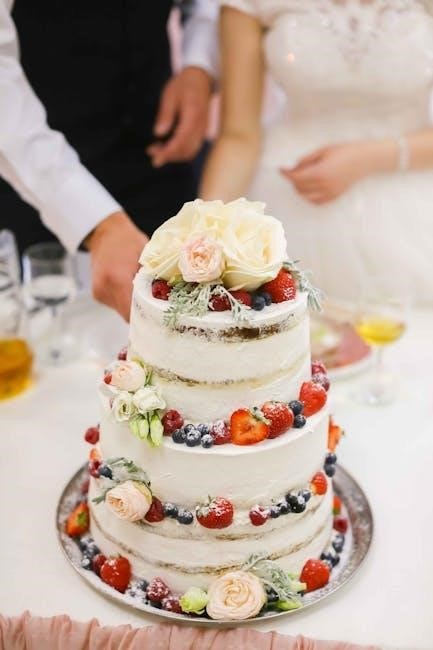
Cutting for Specific Serving Sizes: 10 Servings
Achieving ten even servings from a sheet cake requires a slightly more nuanced approach than cutting for eight. Start by visualizing the cake divided into two equal lengthwise sections – make that initial cut down the center. This creates two substantial halves.
Next, introduce a single horizontal cut across both halves, resulting in four rectangular portions. Now, for the final division, make one horizontal cut through each of the four rectangles, and then two diagonal cuts. This will yield ten appropriately sized pieces.
Maintaining consistent pressure and a smooth sawing motion with your serrated knife is crucial. Consider lightly marking the cutting lines beforehand for increased precision. This method balances portion size and ease of execution, ideal for a moderate-sized group.
Cutting for Specific Serving Sizes: Larger Groups (16+ Servings)
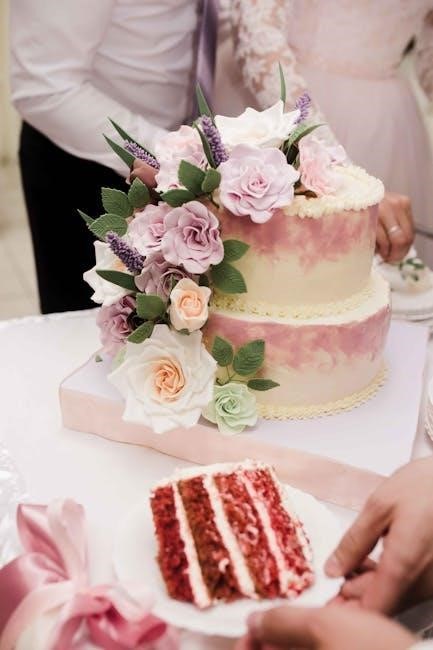
When catering to larger gatherings – sixteen or more guests – a systematic grid approach is most effective for sheet cake cutting. Begin by dividing the cake lengthwise into equal sections, the number depending on your desired slice width. For 16 servings, aim for four lengthwise cuts, creating five columns.
Subsequently, implement a series of horizontal cuts, ensuring consistent spacing between rows. Three horizontal cuts will yield four rows, resulting in a 5×4 grid, totaling twenty slices. Adjust the number of cuts based on the precise number of servings needed.
For exceptionally large cakes, consider employing the Tubingen or muffin techniques to manage size and facilitate easier serving. Precise marking of cutting lines is paramount to ensure uniformity and minimize waste. A hot knife can be particularly beneficial for clean cuts.
The Importance of a Serrated Knife
A serrated knife, often likened to a bread knife, is absolutely crucial for achieving clean, professional-looking sheet cake slices. Unlike smooth blades, the serrations grip the cake’s surface, allowing it to slice through both the cake and the frosting with minimal pressure. This prevents the frosting from being smeared or dragged, maintaining a polished appearance.
The gentle sawing motion created by the serrated edge avoids compressing the delicate crumb of the cake, which can happen with a downward-pressing smooth blade. This results in neater edges and prevents crumbling, especially important for layered or delicate cakes.
Furthermore, a long serrated knife is ideal for sheet cakes, enabling a single, fluid cut across the entire surface. Regularly sharpening the serrations, though different than sharpening a smooth blade, ensures optimal performance and clean cuts every time.
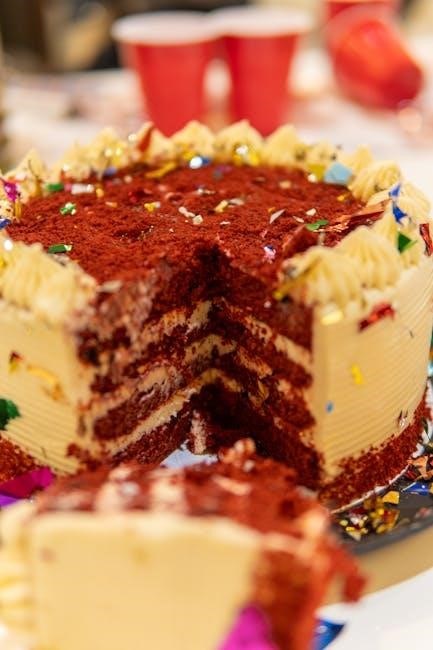
Hot Knife Technique for Clean Cuts
The hot knife technique elevates sheet cake cutting to a professional level, particularly beneficial for cakes with sticky frostings or delicate textures. By gently warming the blade – typically with hot water and wiping it dry immediately before each cut – you reduce friction and create incredibly clean slices;
The heat melts the frosting slightly as you cut, preventing it from clinging to the knife and tearing away from the cake. This results in smooth, defined edges and minimizes crumbs. It’s especially effective for cakes with ganache or buttercream.
However, caution is key! Avoid overheating the knife, as excessive heat can melt the frosting too much, creating a messy result; Re-warm the blade between slices as needed, ensuring it remains warm to the touch but not scalding. This technique truly transforms the presentation of your sheet cake.
Maintaining Frosting Integrity During Cutting
Preserving the pristine appearance of your frosted sheet cake during cutting is paramount for an impressive presentation. Beyond using a sharp, ideally serrated, and potentially warmed knife, several techniques contribute to frosting integrity.
Apply gentle, even pressure while cutting – avoid sawing motions which can drag and distort the frosting. Wipe the knife clean after each slice to prevent frosting buildup and smudging. A turntable can also be incredibly helpful, allowing you to rotate the cake instead of dragging the knife across it.
Chilling the cake slightly before cutting can firm up the frosting, making it less prone to tearing. Consider a crumb coat applied before the final frosting layer; this stabilizes crumbs and provides a smoother surface for cutting. Ultimately, a slow and deliberate approach yields the most visually appealing results.
The Tubingen Cake Technique (For Larger Cakes)
When tackling exceptionally large sheet cakes, the Tubingen cake technique offers a solution for clean cuts and manageable portions. Originating as a method for large German cakes, it involves initially removing a narrow, lateral strip – approximately 24mm wide – along one side of the cake.
This initial cut establishes a clean edge and prevents the frosting from dragging or tearing as you proceed with subsequent slices. The removed strip can be repurposed for decoration or enjoyed as a baker’s treat! Following this, standard cutting methods can be applied with greater ease and precision.
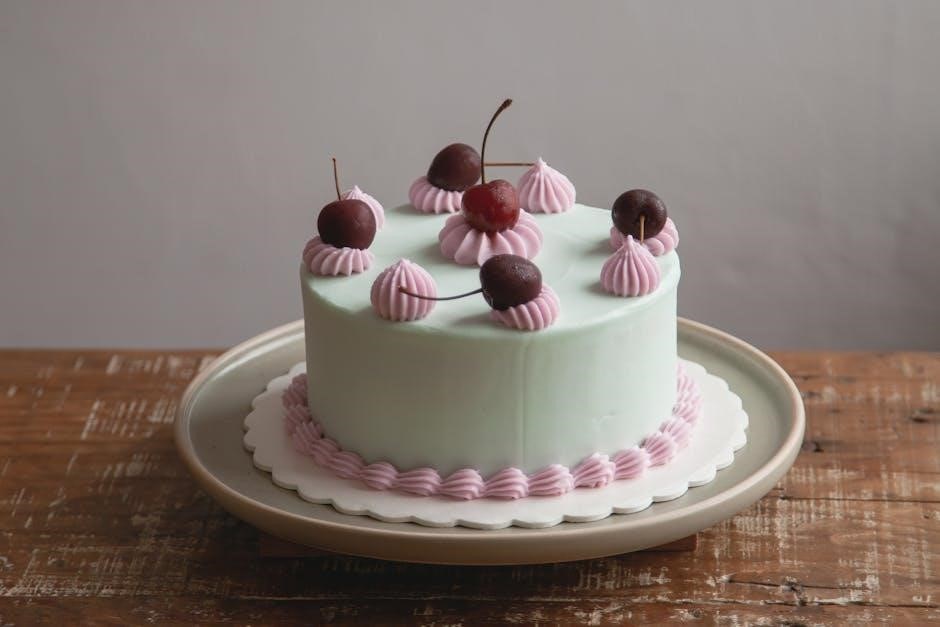
This technique is particularly useful when dealing with soft frostings or cakes prone to crumbling. It minimizes disruption to the overall presentation and ensures each slice maintains a neat, defined shape, even on substantial cakes.
Muffin Technique (Alternative for Large Cakes)
As an alternative to the Tubingen method for large sheet cakes, the “Muffin Technique” provides a simpler approach, particularly useful when precise, uniform slices aren’t paramount. This method focuses on portioning the cake into smaller, individual servings resembling muffins or squares.
Instead of attempting long, continuous cuts, the cake is divided into a grid pattern using a knife or even dental floss for exceptionally clean lines. This creates numerous smaller pieces that are easier to serve and manage, reducing the risk of significant frosting disruption or cake crumbling.
This technique is ideal for casual gatherings or when serving a large crowd where presentation is less critical than ease of distribution. It’s a quick and efficient way to portion a large cake without the complexities of traditional slicing methods.
Parametric Cake Cutting Considerations
Parametric cake cutting represents a highly advanced and artistic approach, moving beyond simple slicing to create intricate designs and patterns. This technique relies on pre-defined mathematical parameters to guide the cutting process, resulting in visually stunning and geometrically precise cake pieces.
Often, a parametric model is first created digitally, outlining the desired cuts and shapes. These designs are then transferred to the cake, typically using templates or laser-cutting technology for extreme accuracy. All details are often crafted from chocolate, adding another layer of complexity and visual appeal.
This method demands significant skill and specialized tools, making it suitable for professional bakers or those with a strong design background. It’s a departure from traditional serving-focused cutting, prioritizing aesthetics and artistic expression above all else.
Full Sheet Cake Slice Dimensions (16×22 ౼ 176 Pieces)
A standard full sheet cake, measuring 16×22 inches, yields a substantial 176 individual pieces when cut into precise 2×2 inch squares. This dimension is ideal for large gatherings, offering a manageable serving size for numerous guests. Achieving this requires meticulous planning and accurate cutting lines.
To execute this efficiently, begin by marking the cake with a grid pattern, creating 8 rows and 22 columns. Utilizing a long, sharp serrated knife, apply consistent pressure and a smooth sawing motion to ensure clean cuts through both cake and frosting. Maintaining a consistent slice width is crucial for uniform presentation.
Consider the frosting integrity during this process; a slightly warmed knife can aid in clean separation. This cutting method maximizes yield and provides a classic, easily distributed serving option for any event.
Round Cake Cutting Guides (PDF Resources)
While this guide focuses on sheet cakes, understanding round cake cutting is often beneficial for comparative techniques. Numerous online resources offer printable PDF guides specifically for round cakes, detailing portion sizes and cutting angles. These resources visually demonstrate how to achieve even slices, minimizing waste and maximizing presentation.
Several websites specializing in baking and pastry arts provide downloadable templates. These templates typically illustrate cutting lines for various serving counts – from 8 to 24 or more – ensuring consistent slice sizes. Searching for “round cake cutting guide PDF” will yield a wealth of options.
These PDFs are particularly helpful for visualizing the geometry involved and mastering the art of precise cake slicing. They can serve as a valuable reference alongside the techniques discussed for sheet cakes, enhancing overall baking skills.
Avoiding Common Cutting Mistakes
Several pitfalls can compromise your beautifully frosted sheet cake. A dull knife is a primary offender, leading to tearing and squashing rather than clean cuts. Failing to plan your cuts beforehand often results in uneven portions and wasted cake. Avoid sawing back and forth; instead, use a smooth, confident motion.
Another frequent mistake is applying too much pressure, which smudges the frosting. Remember to use a light touch and consider warming your knife for exceptionally clean slices. Don’t attempt to cut a frozen cake – it will crumble. Also, resist the urge to recut slices; this creates a messy appearance.
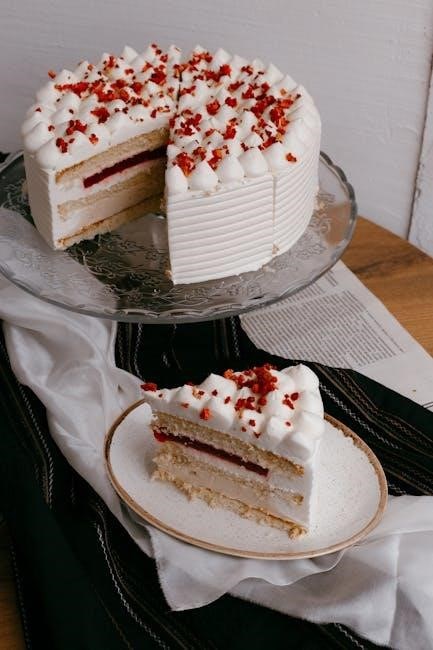
Finally, neglecting to wipe the knife between cuts transfers frosting, diminishing the overall presentation. A clean knife ensures each slice looks as appealing as the first. Careful attention to these details elevates your cake-cutting skills.
Presentation Tips After Cutting
Post-cutting presentation is crucial for maintaining the appeal of your sheet cake. Arrange slices neatly on a platter, considering visual balance and spacing. A simple garnish, like fresh berries or a dusting of powdered sugar, can significantly enhance the look.
If serving a large group, stagger the slices slightly to create a more abundant and inviting display. Consider adding small decorative elements between slices, such as edible flowers or chocolate curls. Wipe any stray frosting from the platter to ensure a clean presentation.
For a more formal setting, individual plating of slices adds a touch of elegance. Remember that presentation elevates the entire dessert experience, transforming a simple cake into a memorable treat. Attention to detail truly matters!
Advanced Techniques: Decorative Cuts & Shapes
Beyond standard slices, explore decorative cutting for a stunning visual impact. Parametric cake designs, utilizing precise, computer-aided cuts, create intricate patterns and shapes – often with chocolate detailing. This requires specialized tools and planning, but yields breathtaking results.
For simpler designs, use cookie cutters after the initial cutting to create themed shapes from individual slices. Consider creating a mosaic effect by arranging differently shaped pieces. Practice clean cuts to maintain frosting integrity during these more complex maneuvers.
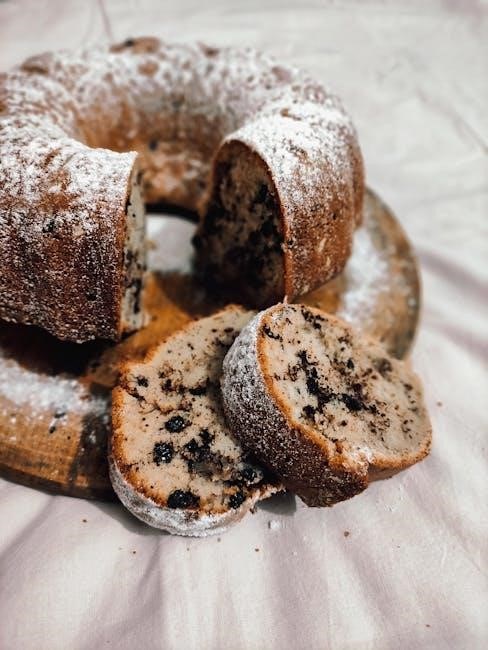
Experiment with angled cuts and layering to add dimension. Remember, decorative cuts are about artistry and precision. A well-executed design transforms a sheet cake into a show-stopping centerpiece, elevating the overall presentation and wowing your guests.
Resources for Further Learning
To deepen your sheet cake cutting expertise, numerous online resources are available. Search for pastry chef tutorials on platforms like YouTube for visual demonstrations of techniques, including hot knife methods and frosting preservation. Many baking blogs offer detailed guides and printable templates for various serving sizes.
Specifically, look for PDF resources detailing round cake cutting guides, as these principles often translate to sheet cake portioning. Websites dedicated to cake decorating frequently feature articles on advanced cutting techniques and decorative designs, like parametric cake approaches.
Don’t overlook online forums and communities where bakers share tips and troubleshoot common cutting challenges. MetroStar’s digital transformation insights, while not directly cake-related, highlight the power of precision – a valuable mindset for any baker! Continuous learning will refine your skills and unlock creative possibilities.